
Most small business owners have never heard of negative SEO until it’s already happening to them. One day you’re ranking well, bringing in leads, building momentum. The next, you’re watching your visibility crater while a vague email from Google lands in your inbox questioning your “business practices.”
I’m not writing this from theory. One of my own service businesses—StumpBustersLLC.com, if you want to pull it up in your favorite SERP tracker and follow along with the recovery in real-time—experienced a 33% visibility drop that coincided suspiciously with competitor activity. I’ve received those ominous Google warning emails that make you second-guess everything you’ve ever done online. That experience is exactly why I take this topic seriously with every client who walks through the door.
The Data Tells the Story
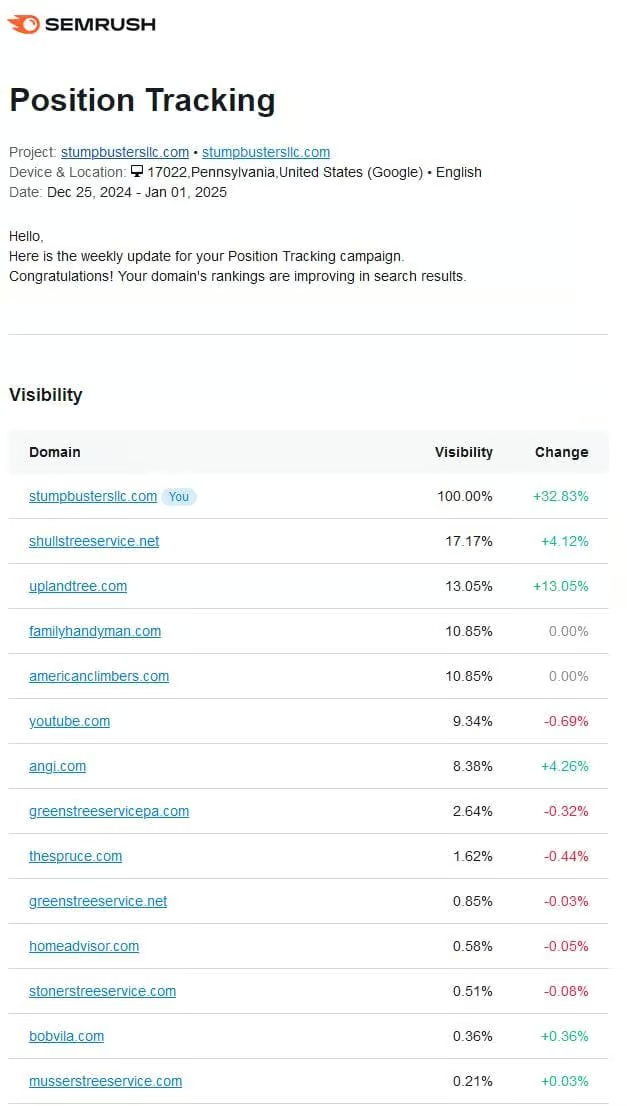
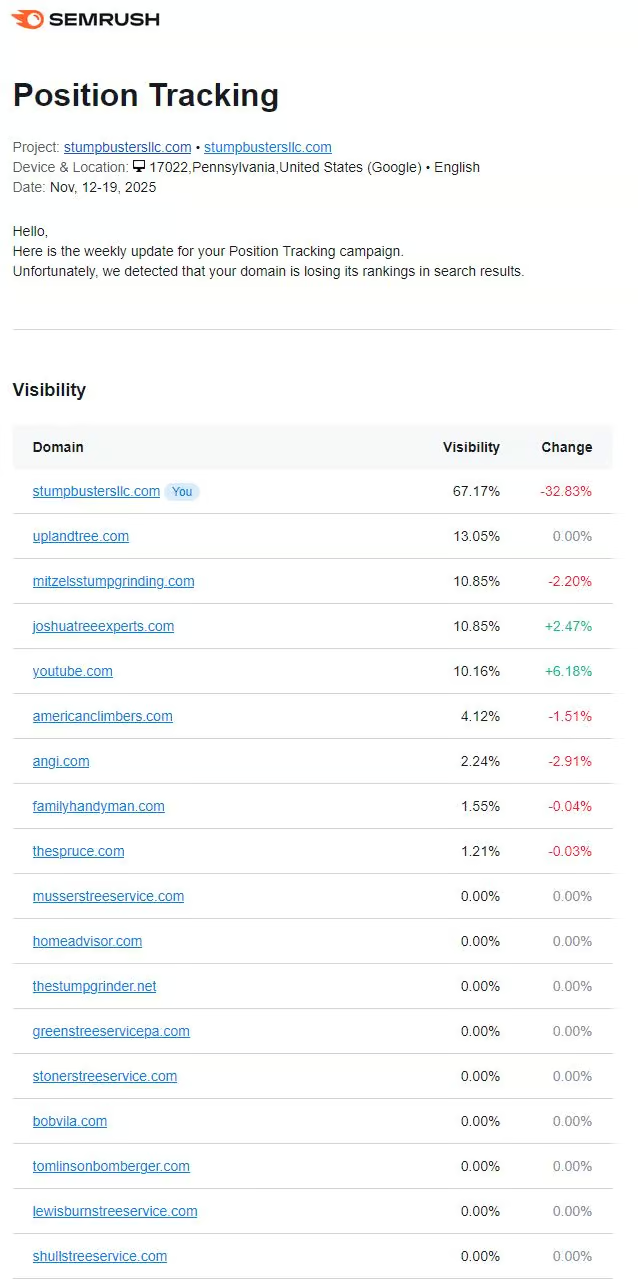
Same keywords. Same business. Same effort. Something changed.
What Is Negative SEO?
Negative SEO is any malicious practice designed to harm a competitor’s search rankings. While Google claims their algorithms are sophisticated enough to ignore most attacks, the reality on the ground tells a different story—especially for small businesses without dedicated SEO teams monitoring things daily.
Common Negative SEO Tactics
- Spammy backlink attacks – Thousands of low-quality or toxic links pointed at your site to trigger Google’s spam filters
- Fake review campaigns – Flooding your profiles with fake negative reviews, or sometimes fake positive reviews designed to get your profile flagged for “incentivized reviews”
- False reporting – Reporting your Google Business Profile, social media accounts, or website for policy violations you didn’t commit
- Content scraping – Copying your content across spammy sites to create duplicate content issues
- Fake brand mentions – Associating your business name with negative or spammy content across the web
- Click manipulation – Bots that find your listing, click it, then immediately bounce to signal poor relevance
The most insidious part? The reporting tactics. It takes a competitor five minutes to file a false report. It can take you weeks or months to recover—if you even realize what happened in the first place.
The Asymmetry Problem
Here’s what makes negative SEO so frustrating: the attacker has every advantage.
They can file anonymous reports. They don’t need evidence. They can do it repeatedly. And platforms like Google often respond to reports with automated warnings or restrictions first, investigations later.
Meanwhile, you’re left scrambling to prove a negative. “Prove you didn’t buy those reviews.” “Prove you didn’t build those spammy links.” “Prove you’re operating a legitimate business.”
For small businesses competing against larger players—or against competitors who simply don’t play fair—this asymmetry can be devastating.
Warning Signs You’re Being Targeted
Not every ranking drop is an attack. Google updates happen. Competitors improve. Seasonality affects traffic. But certain patterns should raise red flags:
- Sudden, unexplained ranking drops – Especially if your content and technical SEO haven’t changed
- Unusual backlink spikes – Check your link profile for sudden influxes from foreign gambling sites, adult content, or obvious link farms
- Google warnings out of nowhere – Particularly vague ones about “policy reminders” when you haven’t changed any practices
- Reviews disappearing or profiles getting suspended – Without clear explanation
- Competitors suddenly appearing where you used to rank – Especially if their rise coincides with your fall
- Direct knowledge of competitor hostility – Sometimes you just know. Trust your gut and start documenting.
How to Monitor and Protect Your Business
Set Up Early Warning Systems
- Google Search Console – Monitor for manual actions, security issues, and sudden indexing changes
- Google Alerts – Set up alerts for your business name, owner names, and key brand terms
- Backlink monitoring – Use tools like SEMrush, Ahrefs, or Moz to track your link profile for sudden toxic influxes
- Review monitoring – Check your Google Business Profile, Yelp, Facebook, and industry-specific review sites regularly
- Rank tracking – Monitor your key terms weekly at minimum so you can spot drops immediately
Document Everything
This cannot be overstated. Screenshot everything, always.
- Your current rankings and visibility metrics
- Your review count and ratings across platforms
- Any emails or warnings you receive from Google or other platforms
- Competitor behavior that seems suspicious
- Timestamps for everything
If you ever need to file a reconsideration request, appeal a suspension, or even pursue legal action, your documentation is your lifeline. Memory isn’t evidence. Screenshots are.
Build a Defensive Foundation
- Diversify your online presence – Don’t rely solely on Google. Build your presence across multiple platforms, directories, and social channels
- Maintain pristine records – Keep your business information consistent everywhere (NAP consistency)
- Cultivate genuine reviews organically – The best defense against fake review accusations is a steady, natural pattern of legitimate reviews over time
- Build quality backlinks proactively – A strong, clean link profile makes toxic link attacks less effective
- Keep your Google Business Profile fully optimized – Complete profiles with regular activity are harder to take down than neglected ones
Recovery Strategies
Already under attack? Here’s how to fight back:
For Spammy Backlink Attacks
- Identify the toxic links using backlink analysis tools
- Attempt to contact webmasters for removal (document your attempts)
- Use Google’s Disavow Tool as a last resort
- Be patient—recovery takes time even after disavowing
For False Reports & Suspensions
- Respond promptly and professionally to any platform communications
- Provide documentation proving your legitimacy
- Request specific information about what triggered the action
- Appeal through official channels—repeatedly if necessary
- Escalate to support forums or official help channels if standard appeals fail
For Fake Review Attacks
- Flag fraudulent reviews through the platform’s official process
- Respond professionally to negative reviews (this shows potential customers you’re engaged)
- Do not respond emotionally or accusatorially—even if you know exactly who’s behind it
- Encourage legitimate customers to share their experiences to dilute the impact
- Document patterns that prove coordination (multiple reviews from new accounts, similar language, timing clusters)
For Content Scraping
- Use tools like Copyscape to identify scraped content
- File DMCA takedown requests with Google and hosting providers
- Ensure your original content has clear publication dates and authorship
When to Get Professional Help
Some negative SEO situations require professional intervention:
- Sustained, sophisticated attacks – When it’s clearly not a one-time thing
- Google penalties or manual actions – These require careful, technical reconsideration requests
- Legal threshold crossed – Defamation, tortious interference, or fraud may warrant legal consultation
- You don’t have time to monitor constantly – Running a business is already a full-time job
At LXB Studio, we help small businesses monitor their online presence, identify attacks early, and develop recovery strategies. We’ve seen these tactics firsthand—not just in client accounts, but in our own businesses. That perspective matters when you’re trying to explain something to a business owner who’s watching their livelihood get sabotaged.
The Uncomfortable Truth
Here’s what nobody in SEO really wants to say out loud: the system can be gamed, and not everyone plays fair.
Big businesses have reputation management teams. They have legal departments that send cease-and-desist letters. They have agency relationships with Google. Small businesses have none of that—which is exactly why they get targeted.
The best defense is awareness, monitoring, documentation, and building a presence strong enough to weather attacks. And when attacks come anyway, having someone in your corner who’s been through it makes a difference.
Watching Your Rankings Drop Without Explanation?
Getting strange emails from Google? We’ve been there.
Want to see a real-world recovery case? Pull up StumpBustersLLC.com in SEMrush or Ahrefs and track along. We’re documenting the climb back in real-time.
You hit a pain point for sure. The constant monitoring thats needed is almost a full time job . ALMOST
BRUTAL when it happens to you. Do not wish this on my worst enemy. The latest GMB negative review blasting combined with the blackmail. Best of luck turning that around.
Brutal when it happens to you …………..